-
 play_arrow
Clubalicious Clubalicious Radio
-
 play_arrow
London Calling Podcast Yana Bolder


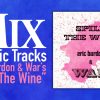
Classic Tracks: Eric Burdon & War’s “Spill the Wine”
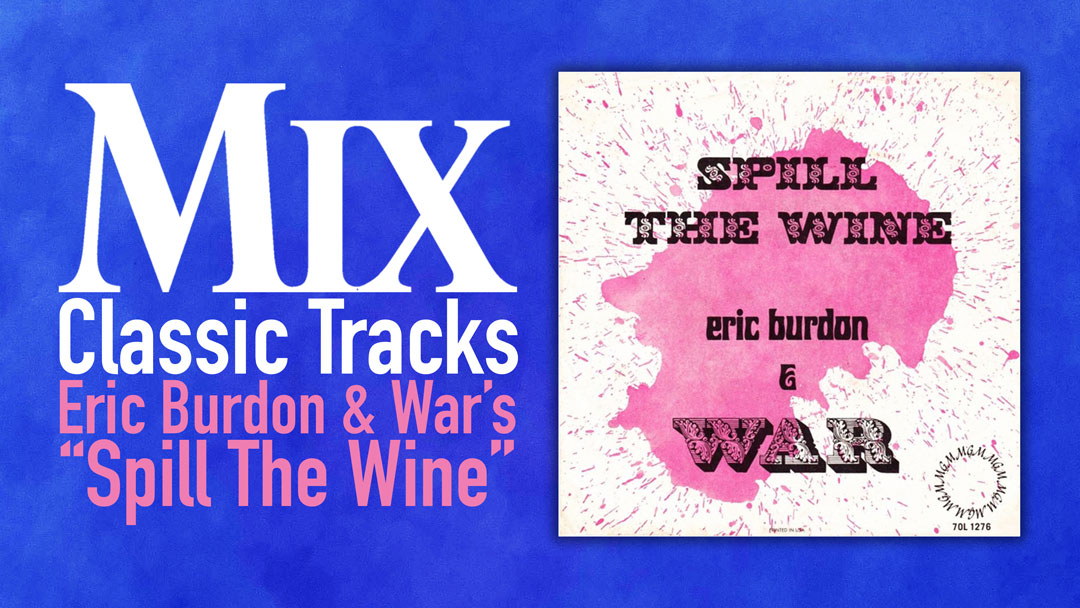
This article first appeared in the August 1995 issue of Mix
After guiding the British band The Animals through a long succession of hits beginning in 1965, Eric Burdon abruptly announced his retirement from the music business in late 1968, and he kept his word—for nearly a year!
First, he hooked up with a budding, soulful harmonica wizard named Lee Oskar, determined to start a band built around the two of them. Then, in the fall of 1969, Burdon and Oskar went to an L.A. club and “discovered” a young band of players from Compton and Long Beach called Night Shift, who were the backing group for L.A. Rams football star Deacon Jones, then attempting to cash in on his fame by establishing a singing career. Burdon hired the band away from Jones (whose career never took off) and changed their name to War.
By the end of 1969, the group was ensconced in L.A.’s Wally Heider Recording with producer/engineer Chris Huston—a transplanted Brit who’d worked on records by everyone from The Who and Led Zeppelin to The Rascals and Solomon Burke. The record, titled Eric Burdon Declares War, was an out-of-the-box smash, largely because of the success of the first U.S. single, “Spill the Wine,” which made it to Number 3 late in the spring of 1970.
“Spill the Wine” was a quirky single, to be sure. It featured Burdon reciting an airy, almost stream-of-consciousness ramble over a steady, percolating funk beat highlighted by congas and various percussion, and a fluttering flute part by Charles Miller that darted through the song like a bird that’s just been uncaged. The chorus, with Burdon singing “Spill the wine/dig that girl,” was the catchy payoff for his odd little story—simple but somehow utterly memorable.
• Classic Tracks: War’s “Low Rider”
“’Spill the Wine’ was actually written about spilling wine on one of Wally Heider’s consoles; that really happened,” says Huston from his Oregon home. “We were in Studio D there, and Lonnie Jordan, the keyboard player, spilled some wine over the mixdown section of their great old Frank De Medeo console, with its API parts. So we had to leave that room and go into another one while the maintenance guy—and back then, it was Deane Jensen, who was absolutely the best there was—spent two days cleaning it up.”
“It sizzled out a couple of faders instantly,” adds Lonnie Jordan by phone from New Haven, Conn., where he was on tour with the latest incarnation of War. “They were so mad—they said it was going to cost me $20,000 to repair the problem. I said, ‘How in the world am I supposed to pay for that? You guys must be out of your minds!’ I didn’t have any money! But I think it was just them saying I owed $20,000 because they were pissed. The damage wasn’t really that much, of course, and Jerry Goldstein, our producer, said he’d take care of it.”
“So the group worked [spilling the wine] into a song,” Huston says, picking up the story. “I remember we all used to sit around the control room and work on words together; everyone would help. Then we’d go out into the studio and try to make it happen.” The song was written by the entire band and Jerry Goldstein. The group brought in a Puerto Rican girl named Carmen to contribute the track’s sexy, cooing Spanish background track.
“She came in and…uh…I shouldn’t say anymore about what she did,” Jordan says with a laugh. “If you keep listening to her voice only on the track, you may hear some things going on back there. I’ll keep that to myself?”
“‘Spill the Wine’ was very spontaneous because that’s the way the group as a whole was,” Huston says. “War’s greatest ability was to take almost anything and turn it into a groove. That was one of the joys of the group—the fact that one of them could be sitting there and, theoretically, slapping the back of his hand with a sandwich, and somebody else would put a bass line to it, and then everyone else would come in. They could take anything and make it rhythmic. It was not at all unusual for them to jam for three or four hours. almost nonstop, just investigating different grooves. That was particularly true later on, but ‘Spill the Wine’ was on the beginning end of that. It was maybe a little more contrived than a lot of their later songs, because when they recorded that, they hadn’t really found themselves yet. Later on, we’d take tracks that had happened two or three years before, and someone would come in and say, ‘Hey, I’ve got an idea for that old track,’ and we’d go back into the tape files and find it. It might just have been a 12-bar section or even less, in the middle of another jam, but they sometimes became new songs.
“One thing I learned very early with War was that as soon as someone came into the studio and picked up an instrument, I’d start rolling tape, because you never knew where it was going to lead, and because it was all so spontaneous, you didn’t want to miss something great. We had microphones all over the place. Lonnie would have a U-shape [of keyboards—Fender Rhodes, RMI, Clavinet, a cut-down B-3] around him, so he’d have three vocal microphones. The conga player [the great Papa Dee Allen] would also have a timpani microphone, a vocal microphone, a gong microphone. We ended up with 38 or 39 mics in the studio,” and Huston would have to make split-second decisions on which ones to open up by closely following where the jams were going.
“If it wasn’t for Chris Huston, War would not have had a sound all those years,” Jordan says. “He’s the guy who really created how we sounded, by knowing how to place the mics and baffle us so things sounded good, and knowing how to get what we did on tape. We already had a sound and a way of working together as musicians, but he was able to get it out to the foreground and make it sound good on a record, which was not that easy because there was a lot going on in that band.”
Jordan adds that producer Jerry Goldstein “was the greatest editor in the world. He did most of the mixing; he was the best. And Chris handled the sound end and the technical end of actually doing the edits by hand. I learned most of what I know about recording from those guys, and then I developed my own techniques from there.”
Huston says that Wally Heider’s “always had the best of everything— from microphones to maintenance. His studios went through a lot of changes later on, but in those days, it was just about the best around. His environment was always real conducive to working hard.”
“Spill the Wine” was mainly live in the studio, with just a few overdubs, tracked on the studio’s relatively new Ampex 16track, with no Dolby.
• Subscribe to Mix Magazine and our Weekday Newsletter for free!
On paper, the combination of a bloke from Newcastle and a bunch of young black guys into funk, gospel, jazz and Latin beats must’ve seemed odd to some people. But the fact is The Animals were very heavily rooted in American R&B music, and Burdon drew his vocal inspiration almost entirely from blues and soul singers. Having Burdon in the band certainly gave War an entree into the music scene, particularly in England.
“What happened was we went to England after the album came out,” Jordan says, “and [the record company] had released the A-side, which was a song called ‘Magic Mountain.’ Nothing was happening with that—the radio people said it was too drug-oriented; they couldn’t deal with it. So they started playing the B-side, which was ‘Spill the Wine.’ By the time we got to England, that was all we heard on the radio. It was on every station.” Success in America came quickly after that.
Still, after a little more than a year (and two albums together), Burdon left War in the middle of a European tour (claiming exhaustion), and the hand immediately carried on very successfully without him. “What happened,” Huston says, “is War ended up upstaging Eric. They were better than Eric; in fact, on their European tour, they’d go on first and be so great that when he’d come out, he’d have to try to catch up to them. Still, during their time with Eric, the guys in War really came alive and developed, almost independently of him. Eric was a catalyst and a mentor for them. They were very young and naïve, but they hit very fast. Within a year, they were driving Ferraris and living way beyond any dream they’d ever had.”
And the hits just kept on coming. Huston worked with them on their first post-Burdon album, All Day Music, which contained the hit “Slipping Into Darkness,” and then watched his friends score again and again through the ’70s and early ’80s with one groovilicious, socially conscious song after another: “The World Is a Ghetto,” “Gypsy Man,” “The Cisco Kid,” “Low Rider” and “Why Can’t We Be Friends,” among others. Today, original members Lonnie Jordan and Harold Brown still front the band, which now records for Avenue Records. The most recent album, the underappreciated Peace Sign, showed that the group still has something to say.
“They’ve given so much to the music world,” says Huston fondly. “I think they were totally underrated. I still think Lonnie Jordan is one of the best voices around, and they could always really play. And one thing you could always say about War: They always played from the heart.”
Featured post
Latest posts
Current show
Upcoming shows
Chart

-
-
 play_arrow
Sylver Gloria Rogers
-
-
-
 play_arrow
Disco Beats Lenny Jackson
-
-
-
 play_arrow
Happy Girl John Palmer
-
-